
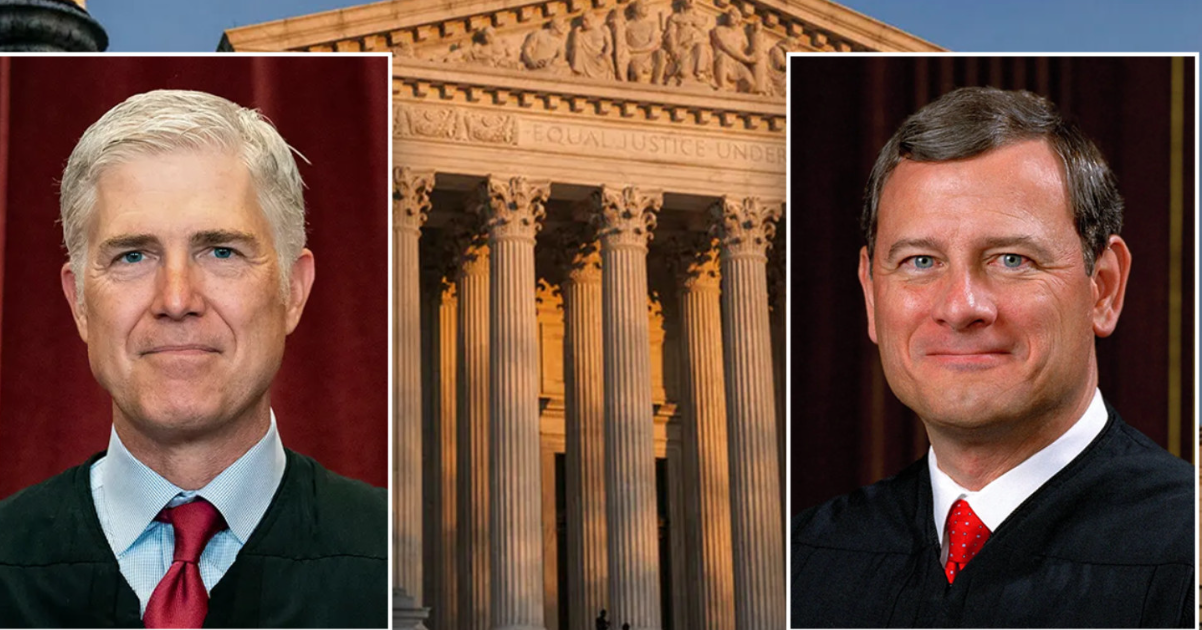
The Supreme Court of the United States ruled unanimously that federal courts do not have the power to review visa revocations tied to fraudulent marriages, confirming that such decisions fall under the discretion of the Department of Homeland Security.
The ruling makes clear that while courts may review initial visa denials, they cannot step in once DHS revokes an already approved visa.
The decision reinforces DHS’s broad authority over immigration matters and could affect enforcement policy, including efforts tied to Donald Trump’s proposed immigration agenda.
Justice Ketanji Brown Jackson, writing for the court, described the statute as “a quintessential grant of discretion” to DHS.
“Congress did not impose specific criteria or conditions limiting this authority, nor did it prescribe how or when the Secretary must act,” the court wrote, citing the law that allows visa revocations “at any time” for “good and sufficient cause.”
The case, Bouarfa v. Mayorkas, involved a U.S. citizen whose husband’s visa was revoked after DHS determined he had previously engaged in a sham marriage, making him permanently ineligible for legal residency.
During arguments, the justices emphasized that Congress limited judicial review to initial visa denials, signaling intent to protect DHS authority over revocations. Chief Justice John Roberts noted that the applicant could reapply for a visa and challenge a denial, though the petitioner’s attorney argued that restarting the process creates long delays and family hardship.
Immigration advocates warned the ruling could worsen conditions for migrants navigating a system with a backlog of more than three million cases. Critics, including the American Civil Liberties Union, argued that limiting judicial oversight could allow constitutional violations to go unchecked, though no evidence of racial bias was found in this case.
In a separate development, a federal appeals court recently ruled that U.S. Immigration and Customs Enforcement may continue using a Seattle airport for deportation flights, striking down a local order that conflicted with federal immigration policy. The decision was seen as favorable to Trump’s incoming administration.
Trump has pledged to begin a mass deportation campaign upon taking office, despite expected legal challenges from immigration advocacy groups.
His incoming “border czar,” Tom Homan, has vowed to enforce deportation orders even if local officials resist.
“There’s a statute that makes it a felony to harbor or conceal illegal aliens or to impede federal officers,” Homan said in a recent interview. “If you don’t want to help, get out of the way. We’re going to do the job.”
