
Trump’s SAVE Act push is turning election integrity into a direct test for Congress, with Republicans calling for proof of citizenship and Democrats crying voter suppression.
President Donald Trump has put election security back in the national spotlight, and this time the fight is centered on the Safeguard American Voter Eligibility Act, better known as the SAVE Act. The idea behind the bill is straightforward: federal elections should require proof of citizenship, and Americans should be able to trust that only eligible citizens are taking part.
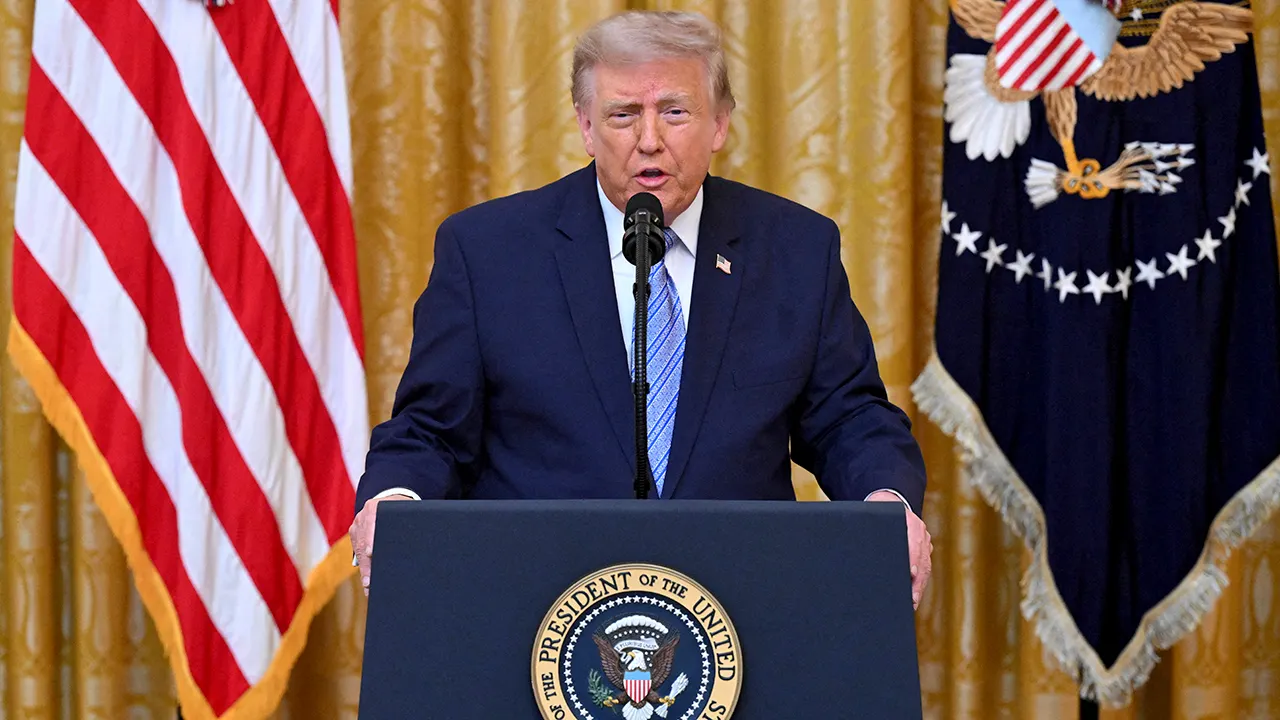
Fox News reported that Trump called on lawmakers to pass the legislation after announcing the declassification and release of intelligence connected to election vulnerabilities. The president described the information as serious enough to demand immediate action from Congress, and conservative lawmakers quickly rallied behind him online.
That reaction was not surprising. Election integrity has been one of the defining issues of the Trump era, and the SAVE Act gives Republicans a concrete legislative vehicle instead of another round of speeches and cable-news arguments. For voters who have spent years hearing about vulnerabilities, questionable registrations, foreign interference, and weak verification standards, the bill represents something clear: a proof-of-citizenship standard for federal elections.
Trump’s argument is easy for ordinary people to understand. If citizenship is required to vote in federal elections, then verifying citizenship should not be treated as controversial. In most areas of life, Americans are asked to prove identity or eligibility for far less important things. The idea that the highest civic act in the country should be protected by basic verification is not extreme. To many voters, it is common sense.
Republican lawmakers echoed that point after Trump’s address. Sen. Mike Lee of Utah, who has been a leading voice on voter ID and proof-of-citizenship legislation, pushed for the SAVE Act as a response to foreign election interference. Rep. Tim Burchett of Tennessee also urged voters to contact senators and demand action.
The Senate is where the real fight sits. Fox News noted that the legislation has passed the House multiple times but has been blocked by Democratic opposition in the Senate, where the filibuster creates a 60-vote threshold for most major legislation. That means even with Republican support, the bill can stall unless enough Democrats break ranks or Senate rules change.
That procedural fight is why some conservatives are now arguing that the Senate cannot claim to care about election integrity while allowing the bill to die behind old institutional habits. Rep. Brandon Gill of Texas called for ending what he described as the zombie filibuster so the bill can move. Whether Senate Republicans are willing to go that far is another question.
Democrats, for their part, are already attacking the SAVE Act as voter suppression. Former Vice President Kamala Harris and other Democrats have framed the proposal as part of a conservative effort to make voting harder. That is the familiar playbook: take a measure that many voters view as basic security, then describe it as an attack on access.
But that line is getting harder to sell to voters who already need identification for travel, banking, employment paperwork, firearm purchases, apartment applications, and countless ordinary transactions. The Republican counterargument is simple: voting should be easy for eligible citizens and hard for anyone who is not legally allowed to vote.
There is also a confidence problem that cannot be ignored. If millions of Americans believe the election system is vulnerable, dismissing their concerns does not restore trust. It deepens distrust. Passing clear rules, applying them consistently, and making voter rolls more secure would do more to rebuild confidence than lecturing people for asking questions.
That is why Trump’s move is politically smart. By tying declassified intelligence claims to a specific bill, he is forcing Congress to choose a side. Lawmakers can either support stronger verification or explain why they oppose it. That clarity benefits Republicans because it turns election integrity from a vague campaign slogan into a direct legislative demand.
The question now is whether Republican leaders will match Trump’s urgency. Conservative voters have heard promises on this issue for years. They have watched court fights, state battles, and congressional hearings. What they want now is action that actually changes the system before the next election cycle hardens into another round of accusations and excuses.
If the SAVE Act advances, Trump will frame it as a victory for legal voters and national sovereignty. If it fails, the failure will become another campaign weapon against Democrats and any Republicans seen as too timid to fight. Either way, the issue is not going away.
For the MAGA movement, the message is clear: election integrity is not a side issue. It is the foundation. Without trust in who votes and how ballots are counted, every other political fight becomes suspect. That is why Trump’s SAVE Act push has hit such a nerve, and why conservatives are likely to keep pressing until Congress is forced to act.
