
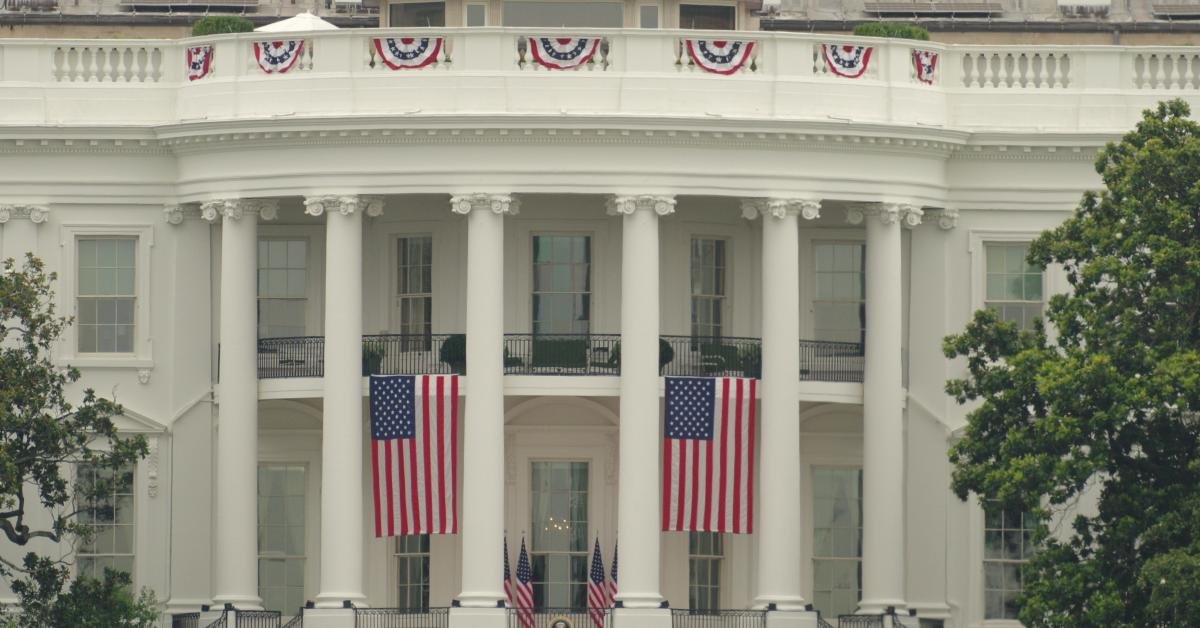
The White House fact-check of Trump’s election security speech gives supporters a document trail to point to, and puts pressure on Congress to answer the claims directly.
The White House is trying to make sure President Trump’s election security speech does not get buried under the usual partisan noise. After the president addressed the country from the White House, the administration released a fact-check laying out the claims behind the speech and pointing to what it says are serious failures in how election-related intelligence was handled.
Just The News reported that Trump’s remarks included allegations that China illegally obtained voter information connected to millions of Americans and that roughly 278,000 non-citizens were found on voter rolls. The White House follow-up went further, arguing that the public already knew foreign adversaries had an interest in American elections, but not the full scale of what had happened.
The central claim is explosive: the White House said China obtained personal information tied to 220 million American voters during the 2020 election cycle. The information allegedly included names, addresses, phone numbers, and party affiliations. If true, that is not a small breach. That is a national-security problem wrapped inside an election-security problem.
The administration also alleged that intelligence agencies knew about the breach in at least 18 states and that the information was kept from President Trump and Congress. That is the part of the story that will matter most to Trump supporters. The question is not only whether foreign actors targeted American voter information. The question is who knew, when they knew it, and why elected leaders were not told.
Just The News reported that the White House fact-check accused elements inside government of withholding election-related assessments from Trump during his first administration. The fact-check also pointed to claims involving an analyst allegedly shaping the President’s Daily Brief in a way that kept election intelligence out, along with an FBI official reportedly describing a kind of shadow-government effort.
Those are serious allegations, and they deserve more than a dismissive shrug from the political class. If the claims are wrong, Congress should demand proof and expose the error. If the claims are right, then the country needs accountability from the agencies and officials involved. Either way, the public deserves answers.
The fact-check also raised the issue of double standards. According to the White House, the Biden administration responded forcefully when China obtained similar information involving British voters, and the Justice Department brought cases when Iranian hackers obtained a much smaller number of American voter files. The administration’s argument is that the response looked very different when the alleged compromise involved far more American voters under Trump.
That is exactly the kind of inconsistency that fuels distrust. Americans have watched federal institutions move aggressively in some cases and slowly in others. When the pattern appears to follow partisan lines, people stop believing the system is neutral. That is why the White House is trying to put the comparison in writing and make critics respond to the details.
The release also pointed to mail-in voting and voter-registration vulnerabilities, including an allegation involving Michigan canvassers and fraudulent registrations in the weeks before the 2020 election. The White House accused the Biden Justice Department of moving slowly on the matter for years. Again, the question for Congress should be simple: what happened, what was documented, and who made the decisions?
This is where the SAVE Act connects to the broader fight. Trump is not only criticizing what happened in the past. He is urging lawmakers to pass a proof-of-citizenship standard for federal elections. The White House fact-check therefore serves two purposes: it defends the speech and builds the case for legislative action.
Supporters of the president will see this as long overdue. They have heard for years that concerns about election security are conspiracy theories, even as officials from both parties admit that foreign adversaries attempt to interfere with American elections. The White House is now saying the issue is not theoretical and that the government has records the public should take seriously.
Critics will argue that Trump is trying to relitigate old fights. But that response misses the point. Election security is not only about the last election. It is about the next one. If voter data can be compromised, if agencies fail to share intelligence, if voter rolls contain ineligible names, and if registration systems are vulnerable, then those problems do not disappear because political commentators are tired of hearing about them.
The strongest move now would be open hearings, document production, and clear answers. Congress should force the relevant agencies to explain what they knew and what they did. States should review their rolls and systems. Lawmakers should debate the SAVE Act in public, not hide behind procedural excuses.
For Trump and the America First movement, the political message is obvious: secure elections are not optional. They are the starting point for every other issue. If the White House fact-check holds up under scrutiny, it gives Trump supporters a paper trail and gives Congress a choice. Either investigate and fix the vulnerabilities, or explain to voters why basic election confidence is too much to ask.
